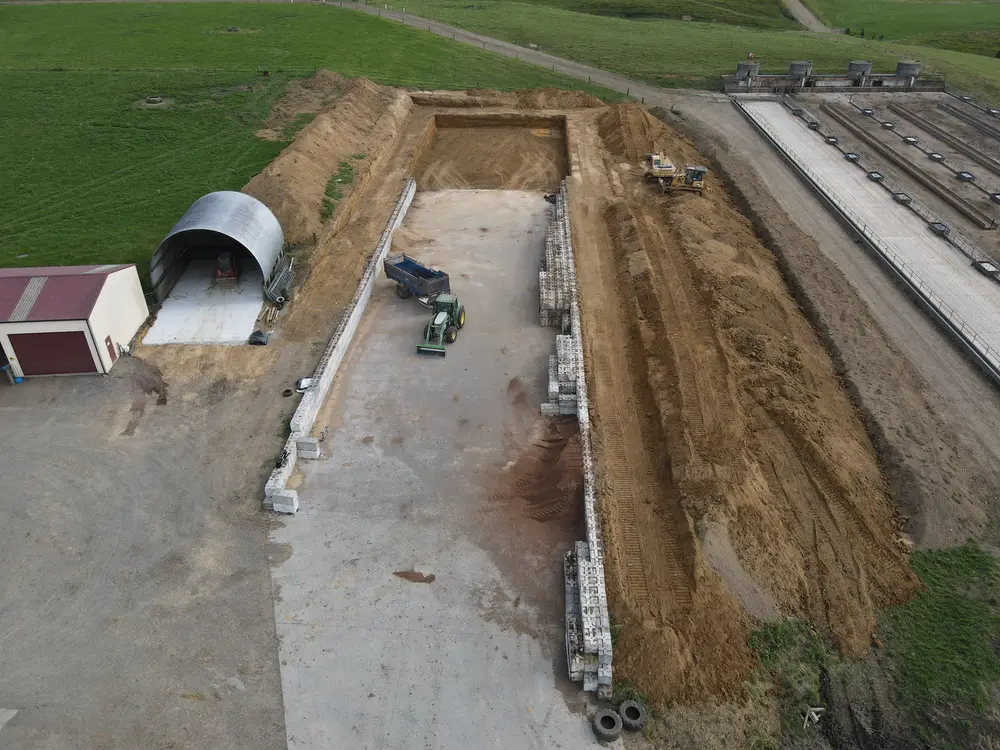
The base is the whole job
A feed pad carries loaded tractors, a mixer wagon and a mob of cows, in the wet, every day of the season. Concrete laid on a base that was not prepared and compaction tested will crack, pump and lift, and once it starts you are patching it forever.
We build the base the way it needs to be built: topsoil and any soft material stripped out entirely, hardfill brought in and placed in layers, each layer compacted, and the whole thing trimmed to the falls before a single form goes down.
Falls and effluent capture
Anything you feed on is an effluent surface, and it has to be treated as one. Water landing on a feed pad picks up nutrient and cannot be allowed to run off to a drain or a waterway.
That means the pad is graded to a designed fall, with the run off collected and directed into your effluent system rather than away from it. We set the falls at base stage and hold them through to the finished surface, and we form up the channels, sumps and pipework the design calls for.
Silage and PKE bunkers
Bunkers take a different kind of punishment: wall loading from compacted silage, machinery pushing against the face, and a constant acidic leachate that eats poorly specified concrete.
We form and pour bunker floors and walls square and to level, with the base falls set so leachate goes where it is meant to go and not into the ground. Getting the floor flat and true also means the tractor can compact the stack properly, which is worth real money in feed quality over a season.
What we handle
- Site strip, cut to level and removal of unsuitable material
- Hardfill supply, placement and layered compaction
- Trimming and grading to the designed falls
- Subsoil and stormwater drainage around and under the pad
- Effluent channels, sumps and pipe connections
- Boxing, reinforcing and concrete placement
- Bunker floors, walls and aprons
- Tidy up, topsoil respread and access reinstatement
Good to know
Can you do the concrete as well as the earthworks?
Yes. We form, box and pour feed pads, bunker floors and aprons, with the hardfill and drainage underneath done as part of the same job. One crew from the strip to the finished surface.
Why does the base matter so much?
Concrete is only as good as what it sits on. If soft material is left in or the hardfill is not compacted in layers, the slab will crack and pump under loaded machinery and stock. The base is where a pad is won or lost.
Does a feed pad need to connect to the effluent system?
Yes. Anything you feed stock on collects nutrient, so run off has to be captured and directed into your effluent system rather than allowed to reach a drain or waterway. We build the falls and channels to do that.
How long does a feed pad take?
It depends on size, how much material has to come out and go in, and the weather. We give you a realistic timeframe once we have walked the site, and we work around milking and feeding.
Often done at the same time
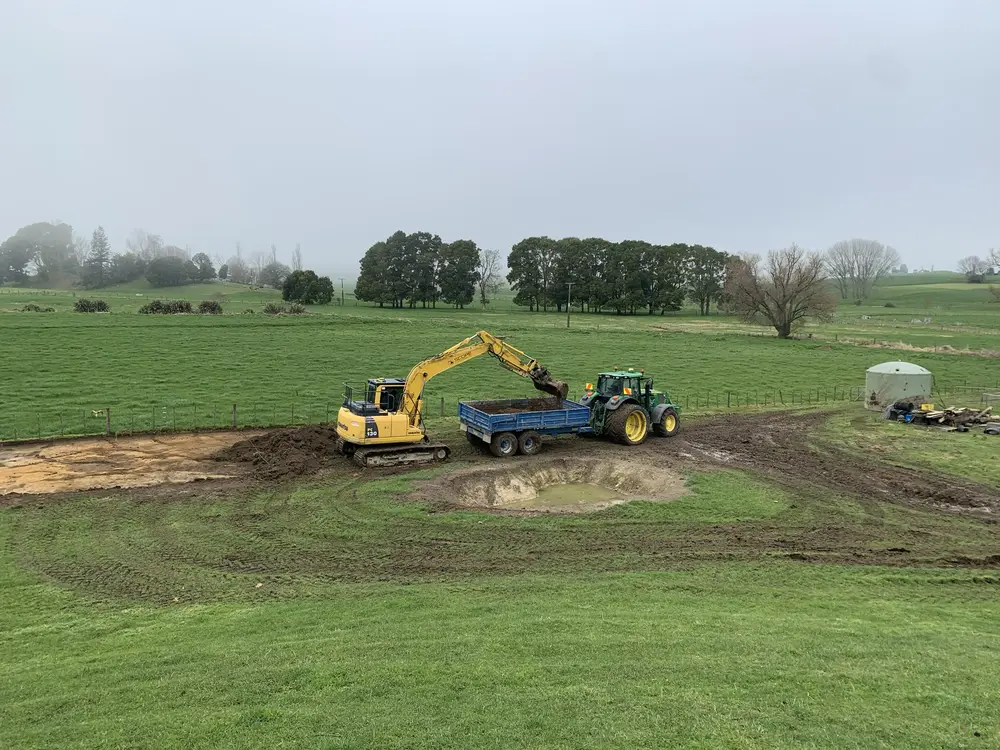
Dairy effluent pond construction
Effluent and storage ponds dug, battered, benched and compacted to spec across the Waikato and King Country. Built to hold, and built to satisfy the consent conditions your council put on it.
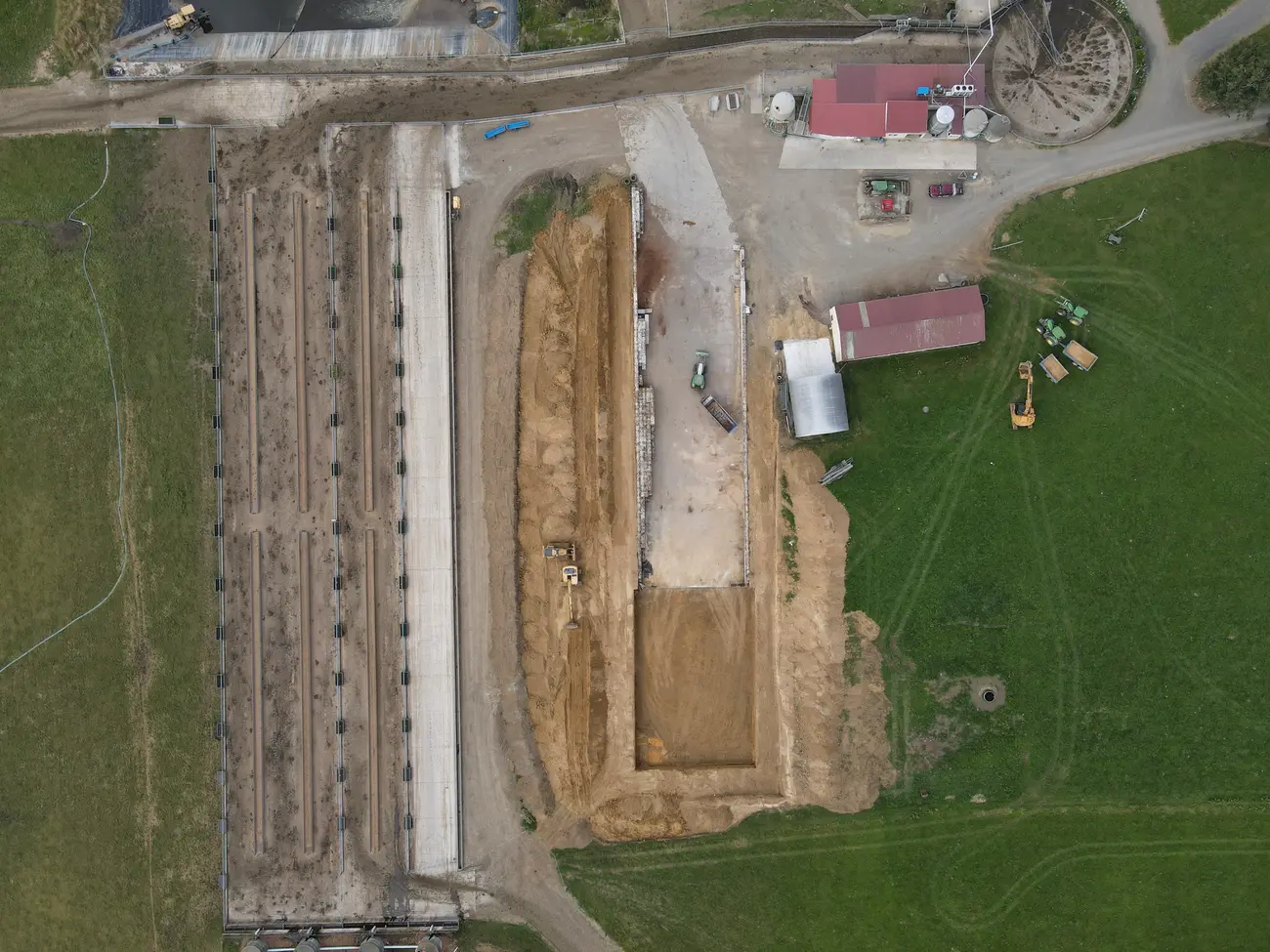
Farm races and tracks
All weather races and laneways formed, cambered, metalled and compacted. Built so the herd walks comfortably, the tanker gets in year round, and the surface does not disappear into the mud each winter.
All rural earthworks
See the full range of rural earthworks we take on across the Waikato and King Country.
Across the Waikato & King Country
Owner-operated and local. If you’re on this list or nearby, give Lyndon a call — we cover the wider Waipā district and beyond.
- Te Awamutu
- Cambridge
- Hamilton
- Ōtorohanga
- Kihikihi
- Pirongia
- Waipā
- King Country
- & surrounds