Home / Residential / Drainage & stormwater
Residential earthworksSection drainage and stormwater
Stormwater lines, subsoil drainage, soak holes and downpipe connections. Water is what turns a good section into a problem section, and it is far cheaper to deal with before the lawn goes in.
Deal with water before the landscaping
Drainage is the least visible money you will spend on a section and usually the best spent. A wet section means a lawn that will not establish, garden beds that drown, paths that stay green and slippery, and in the worst cases water finding its way under the house.
The time to do it is while there is still machine access and the ground is already open. Retrofitting drainage through a finished lawn, established planting and a new driveway costs several times what it costs to put in beforehand.
Stormwater from the roof
A house roof sheds a serious volume of water in a Waikato downpour, and all of it has to go somewhere controlled. Downpipes discharging at the base of the wall is how you get damp foundations and a permanently boggy strip around the house.
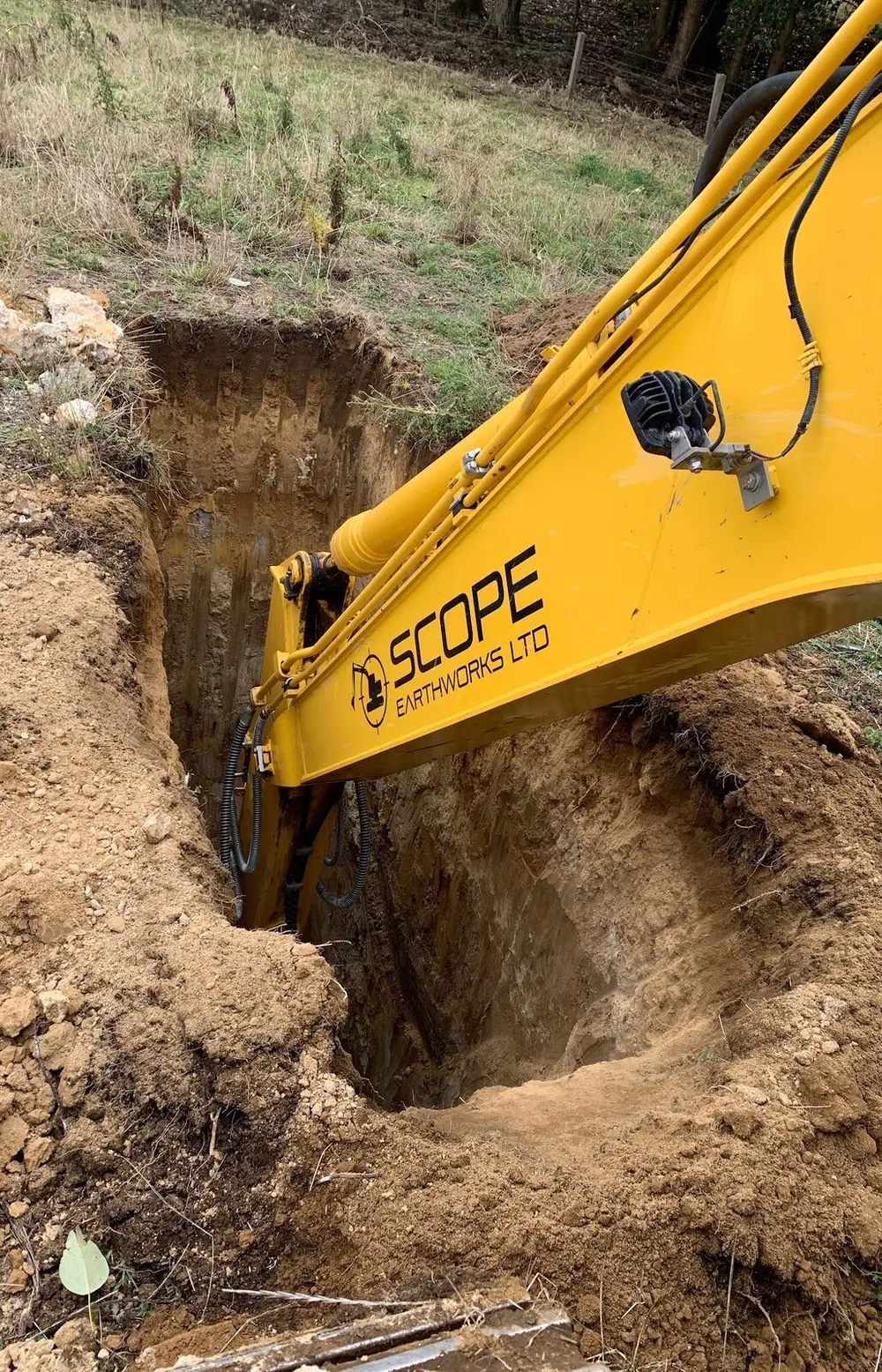
We trench and lay stormwater lines from the downpipes to wherever the discharge point is: a council connection, a soak hole, or an approved outfall. Lines are laid to a consistent fall with the right pipe and proper bedding, with junctions and inspection points where they belong.
Subsoil drainage and soak holes
Where the problem is groundwater rather than roof water, subsoil drainage is the answer: perforated pipe in a gravel backfilled trench, laid to fall, intercepting water before it reaches the parts of the section you care about. Cut off drains across a slope are very effective at stopping water arriving from uphill.
Soak holes work where the ground below has the capacity to take the water. That varies enormously across the Waikato, so it is worth knowing what your ground actually does before designing around one.
What we install
- Stormwater lines and downpipe connections
- Council stormwater connections and approved outfalls
- Soak holes and soakage pits
- Subsoil and perimeter drainage around the house
- Cut off drains across sloping sections
- Sumps, grated channels and driveway drainage
- Service trenching for water, power and wastewater
- Backfill, compaction and reinstatement
Good to know
When should drainage go in?
Before landscaping and before the driveway, while there is still machine access and the ground is open. Retrofitting drainage through a finished lawn, planting and driveway costs several times more.
Can I just run downpipes onto the ground?
It is a common cause of damp foundations and a permanently wet strip around the house, and it is generally not accepted on a new build. Roof water should be piped to a controlled discharge point.
Will a soak hole work on my section?
It depends entirely on what the ground below will take, and that varies a lot across the Waikato. Where soakage is poor, a piped connection or an approved outfall is the better option. We will tell you what the ground is doing.
Can you dig service trenches at the same time?
Yes, and it is worth doing together. Water, power and wastewater trenching at the same time as the stormwater saves mobilising twice and saves cutting up ground you have already reinstated.
Often done at the same time
House site preparation and building platforms
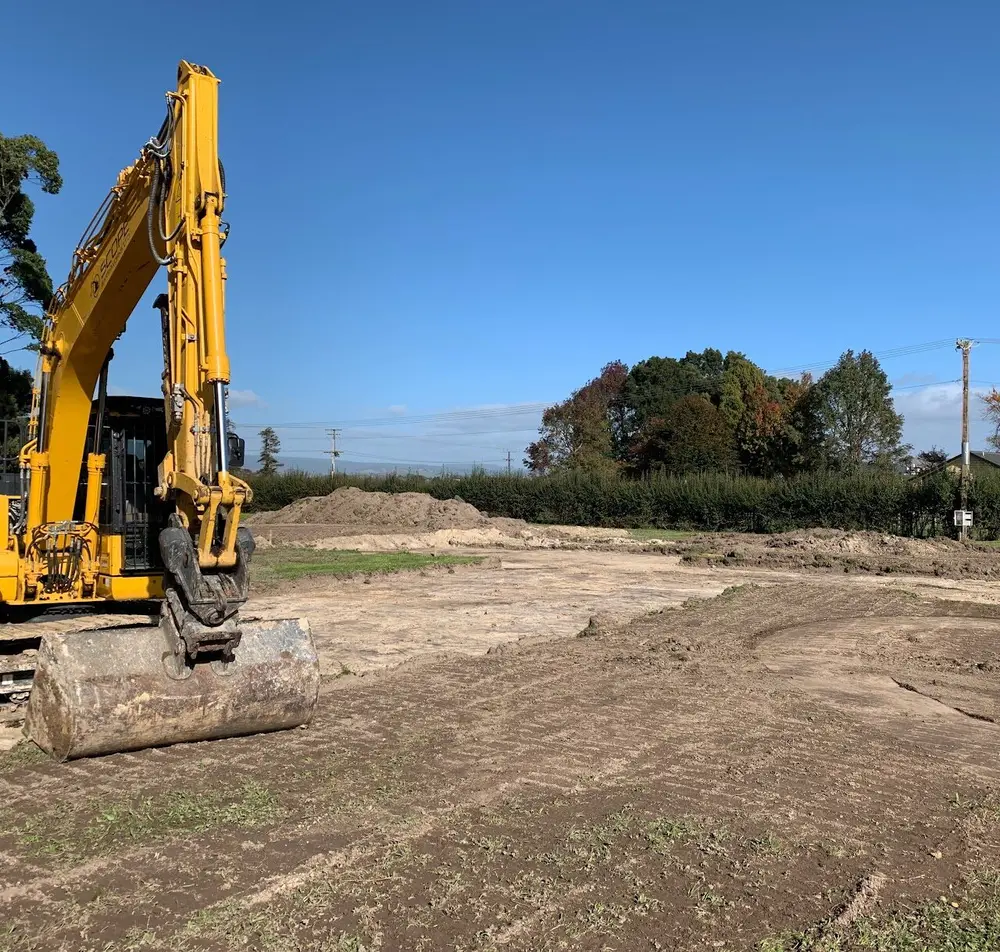
Building platforms cut, filled, benched and compacted to grade, ready for your foundation crew and your engineer. The first trade on site sets the tolerance for everything that follows.
Driveways and rural access
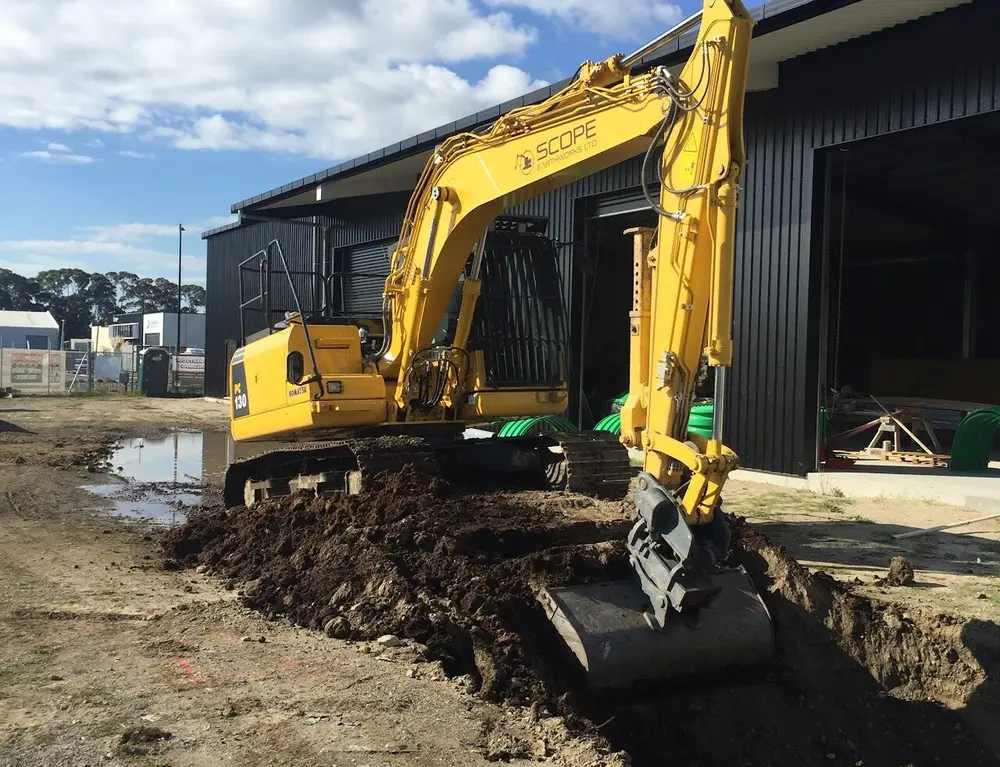
Driveways, entranceways and long rural access formed, metalled and compacted, with the culvert and crossing at the road end done properly. From the gate to the front door, in all weather.
All residential earthworks
See the full range of residential earthworks we take on across the Waikato and King Country.
Across the Waikato & King Country
Owner-operated and local. If you’re on this list or nearby, give Lyndon a call — we cover the wider Waipā district and beyond.
- Te Awamutu
- Cambridge
- Hamilton
- Ōtorohanga
- Kihikihi
- Pirongia
- Waipā
- King Country
- & surrounds