What wet ground actually costs
A paddock that stays wet is not just inconvenient. It grows less, it pugs badly when stock go on it, the damage sets back the next rotation, and you lose grazing days at exactly the time of year feed is tight.
Drainage is one of the few pieces of farm infrastructure that pays back in production rather than just convenience. On the right paddock it can be the difference between a marginal block and a productive one.
Subsoil and mole drainage
Where there is a heavy subsoil layer holding water above it, novaflo or perforated pipe laid in a gravel backfilled trench gives that water somewhere to go. Spacing and depth depend on the soil, so we look at what the ground is actually doing rather than applying a formula to it.
Over clay soils, mole drainage run across a piped system is often the most cost effective option going. The moles crack the soil and feed water to the collector pipes, and it covers a lot of ground for the money.
Culverts and crossings
A culvert that is too small does not just block, it washes the race out around it and takes the crossing with it. We size culverts for the catchment they carry, not the pipe that happens to be lying in the shed, and set them at the right invert so water runs through rather than backing up.
Inlets and outlets get formed and protected so the ends do not scour out, and the crossing itself gets built up so it is the solid part of the race rather than the soft spot.
What we install
- Subsoil drainage: novaflo and perforated pipe, gravel backfilled
- Mole drainage over clay soils, run to a piped collector system
- Open drains, water tables and race side drains
- Culvert supply, installation and headwall protection
- Stock and vehicle crossings
- Outfalls and connections to existing drains
- Cleaning out and reinstating drains that have silted up
Good to know
How do I know if a paddock needs drainage?
The usual signs are surface water sitting after rain, pugging out of proportion to the stocking, rushes and poor pasture species taking over, and a paddock that is always the last to come right in spring. We can walk it and tell you what is happening underneath.
What is the difference between mole and subsoil drainage?
Subsoil drainage is pipe laid in a gravel backfilled trench, giving water a permanent path out. Mole drainage cracks heavy clay soil with a mole plough and feeds that water into a piped system. Over clay, moles combined with collector pipes usually cover the most ground for the money.
What size culvert do I need?
It depends on the catchment feeding it, not on what pipe is available. An undersized culvert blocks and then washes out the race around it, which costs far more than the right pipe would have. We size it for the water it has to carry.
Can you clean out existing drains?
Yes. Silted up drains and water tables that no longer outfall are a common cause of wet paddocks and failing races. Often reinstating what is already there fixes the problem.
Often done at the same time
Farm races and tracks
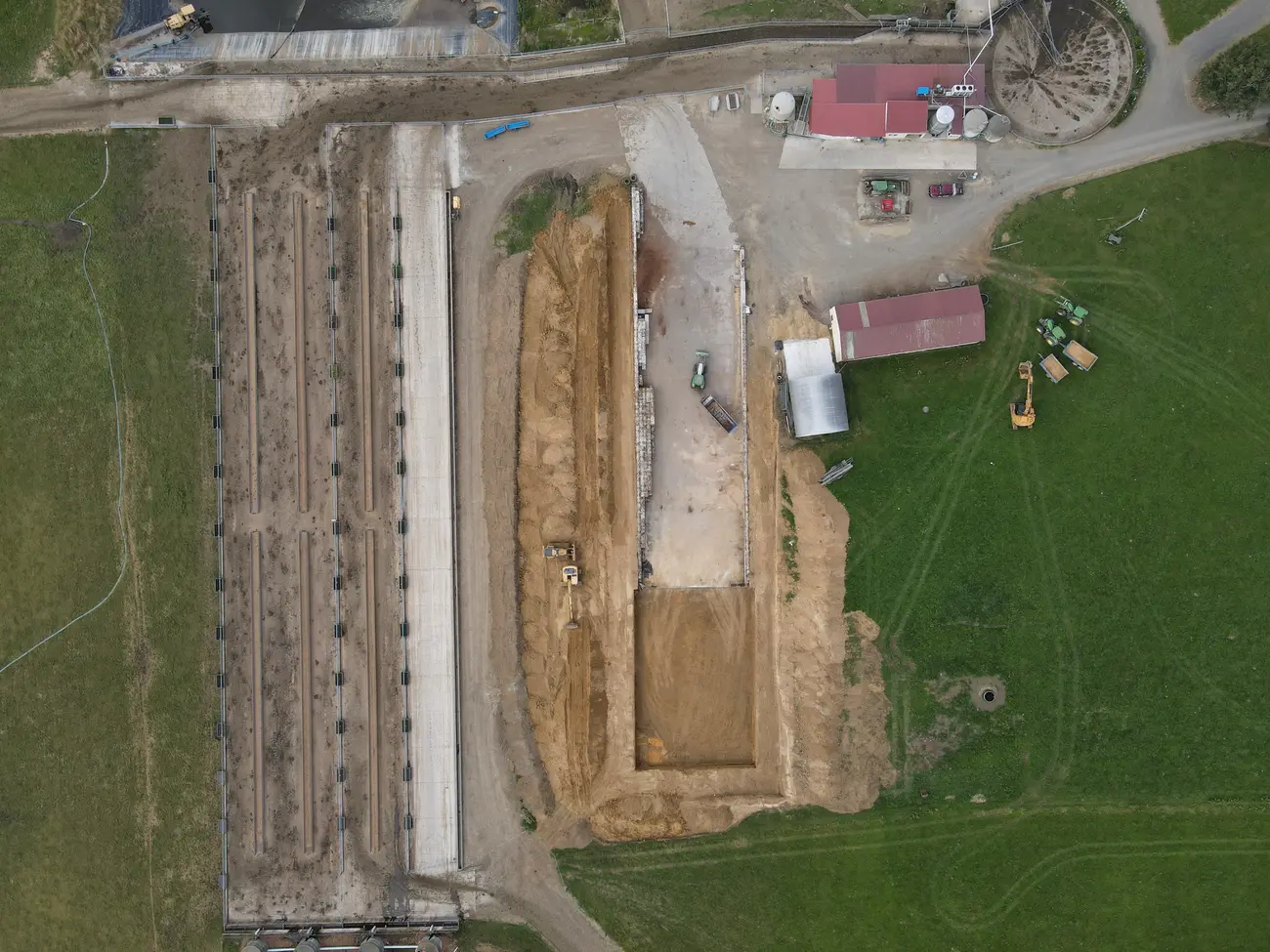
All weather races and laneways formed, cambered, metalled and compacted. Built so the herd walks comfortably, the tanker gets in year round, and the surface does not disappear into the mud each winter.
Dairy effluent pond construction
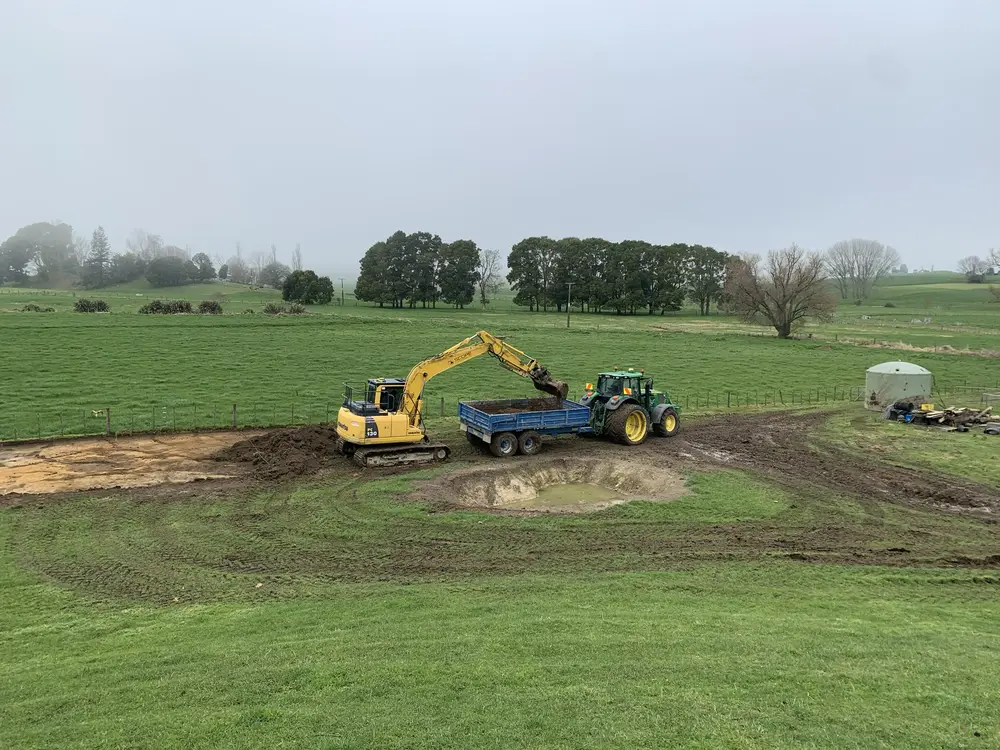
Effluent and storage ponds dug, battered, benched and compacted to spec across the Waikato and King Country. Built to hold, and built to satisfy the consent conditions your council put on it.
All rural earthworks
See the full range of rural earthworks we take on across the Waikato and King Country.
Across the Waikato & King Country
Owner-operated and local. If you’re on this list or nearby, give Lyndon a call — we cover the wider Waipā district and beyond.
- Te Awamutu
- Cambridge
- Hamilton
- Ōtorohanga
- Kihikihi
- Pirongia
- Waipā
- King Country
- & surrounds