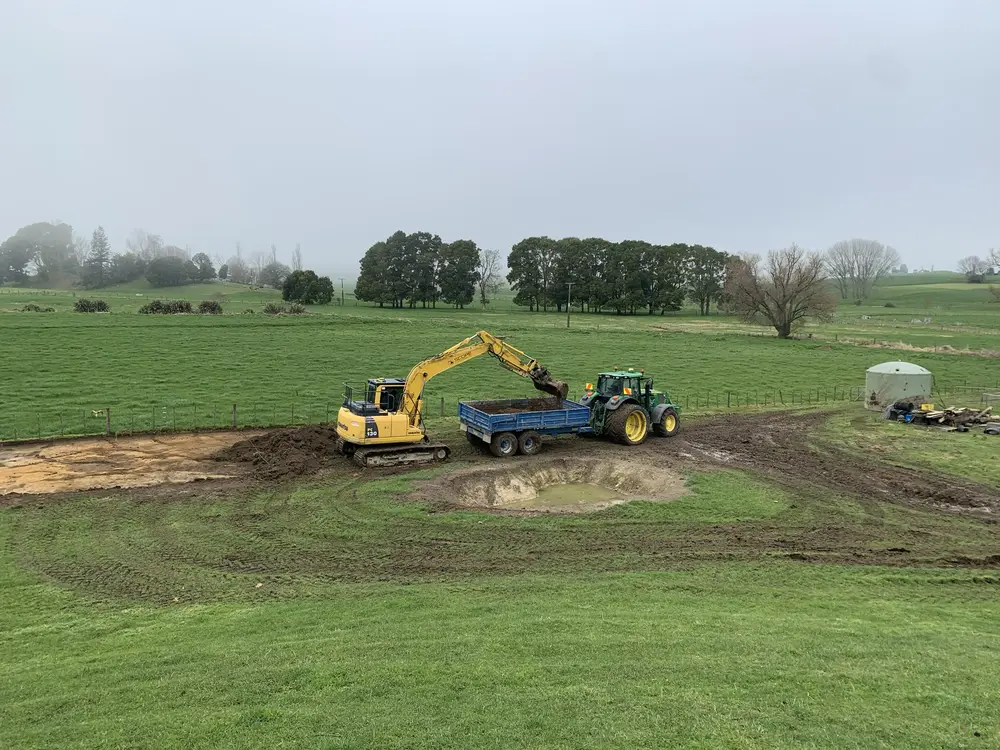
Dairy effluent pond construction
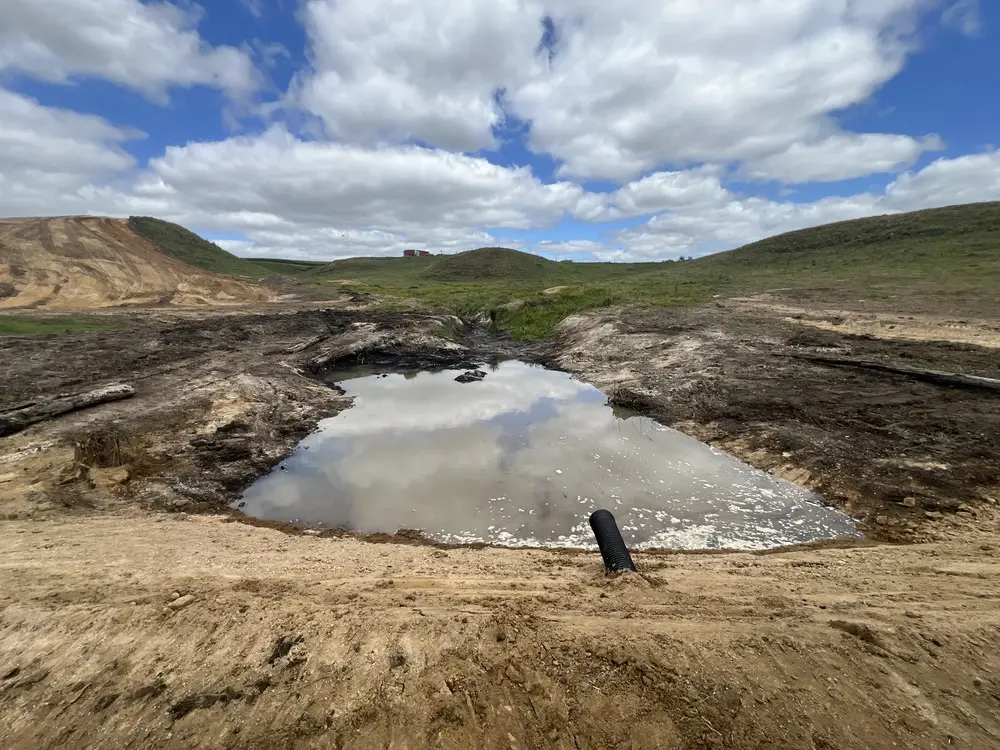
Effluent and storage ponds dug, battered, benched and compacted to spec across the Waikato and King Country. Built to hold, and built to satisfy the consent conditions your council put on it.
Storage is the part that keeps you compliant
Effluent management on a Waikato dairy farm lives or dies on storage. Irrigating onto wet or saturated soil risks ponding and run off, which is exactly what a consent is written to prevent. The only way to avoid it is to be able to hold effluent until conditions are right to apply it.
That makes the pond the buffer for the whole system. Undersize it or build it badly and you are forced into spreading at the wrong time. Get the storage right and the rest of the system has room to work.
What we do
We take the pond from set out through to a shaped, compacted hole ready for the liner crew.
- Set out and levels taken off your design or engineer’s drawings
- Topsoil stripped and stockpiled separately for reuse
- Bulk excavation, with spoil placed or carted to where you want it
- Batters cut to the specified slope so they are stable and safe to walk
- Benching and keying into the base so the structure ties in properly
- Compaction in layers, not one big dump and a squash
- Base and batters trimmed clean and even, ready for lining
- Inlet, outlet and stone trap excavation where the design calls for it
Built for the liner, not just the hole
A liner only performs as well as the surface underneath it. Stones, roots, soft spots and rough batters are what puncture and stress a liner, and that failure usually shows up years later when it is expensive to fix.
We finish ponds with lining in mind: even batters at a consistent grade, a trimmed base free of anything sharp, and compaction that will not settle unevenly under load. Whether you are going synthetic or clay, the prep is what makes it last.
What affects the price
Two ponds of the same volume can price very differently. The things that move the number are:
- Soil type. Clay digs and compacts differently to peat or sandy ground.
- Water table. High groundwater changes the method and can add dewatering.
- Spoil. Where it goes, how far it travels, and whether it can stay on farm.
- Access. Gateways, culverts and travel distance from the road for plant.
- Depth and volume. Deeper ponds mean more batter and more careful benching.
- Time of year. Winter ground costs more to work and damages more pasture.
Have this ready before we quote
It speeds things up considerably if you can put your hands on your resource consent conditions, any storage calculation or design you have had done, and any dairy company requirements that apply. If you have not got to that stage yet, ring anyway. We can look at the site and tell you what is realistic before you spend money on design.
Good to know
Do you build effluent ponds to consent?
Yes. We excavate, shape, bench and compact effluent and storage ponds to the design and levels supplied, so the finished pond meets the conditions on your resource consent and is ready for lining.
Do you install the liner as well?
We build the pond to a lining standard: even batters, trimmed base, proper compaction and no sharp material left in the surface. Liner installation is done by a specialist liner crew, and we work in with them.
Can you work around milking and the tanker?
Yes. Farms do not stop for earthworks. We plan access, spoil placement and the working day so the tanker still gets in and stock can still move.
What happens to the dirt that comes out?
Usually it stays on farm. It can be spread, used to build up a pad or track, or stockpiled somewhere out of the way. We agree that before we start so it is not sitting where you need it later.
What time of year is best to build a pond?
Late spring through summer and into early autumn is easiest. The ground is drier, compaction is better, plant travels without damaging pasture and the job runs faster. Winter work is possible but costs more.
Often done at the same time
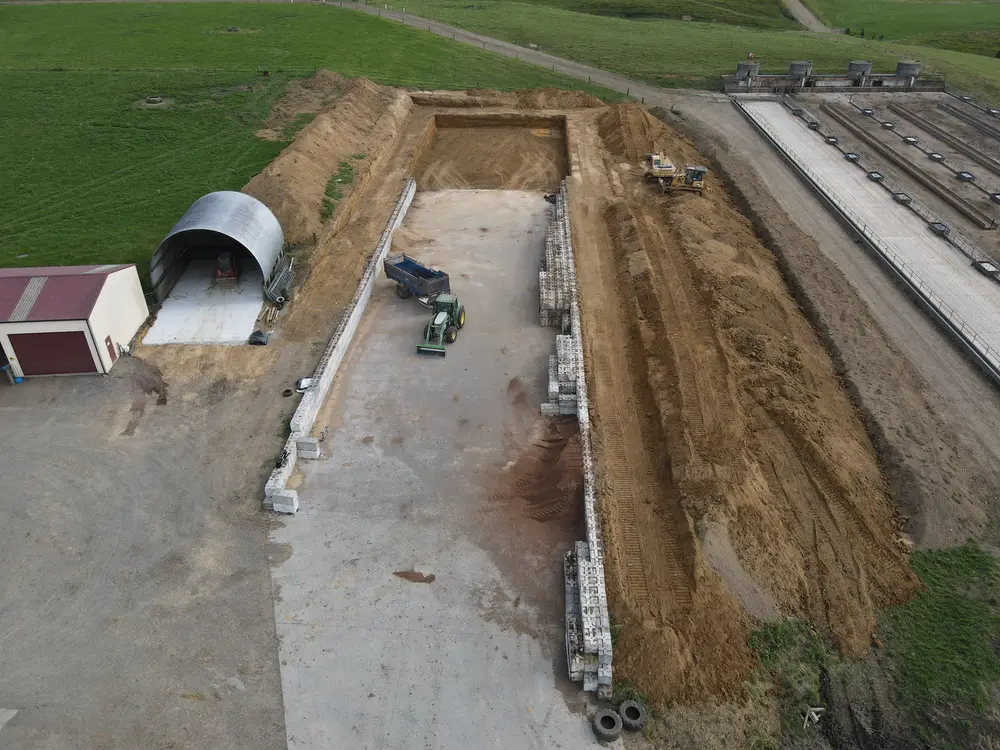
Feed pads and silage bunkers
Feed pads, silage stacks and PKE bunkers built square and built to drain. The concrete gets the attention, but it is the base and the fall underneath that decide how long it lasts.
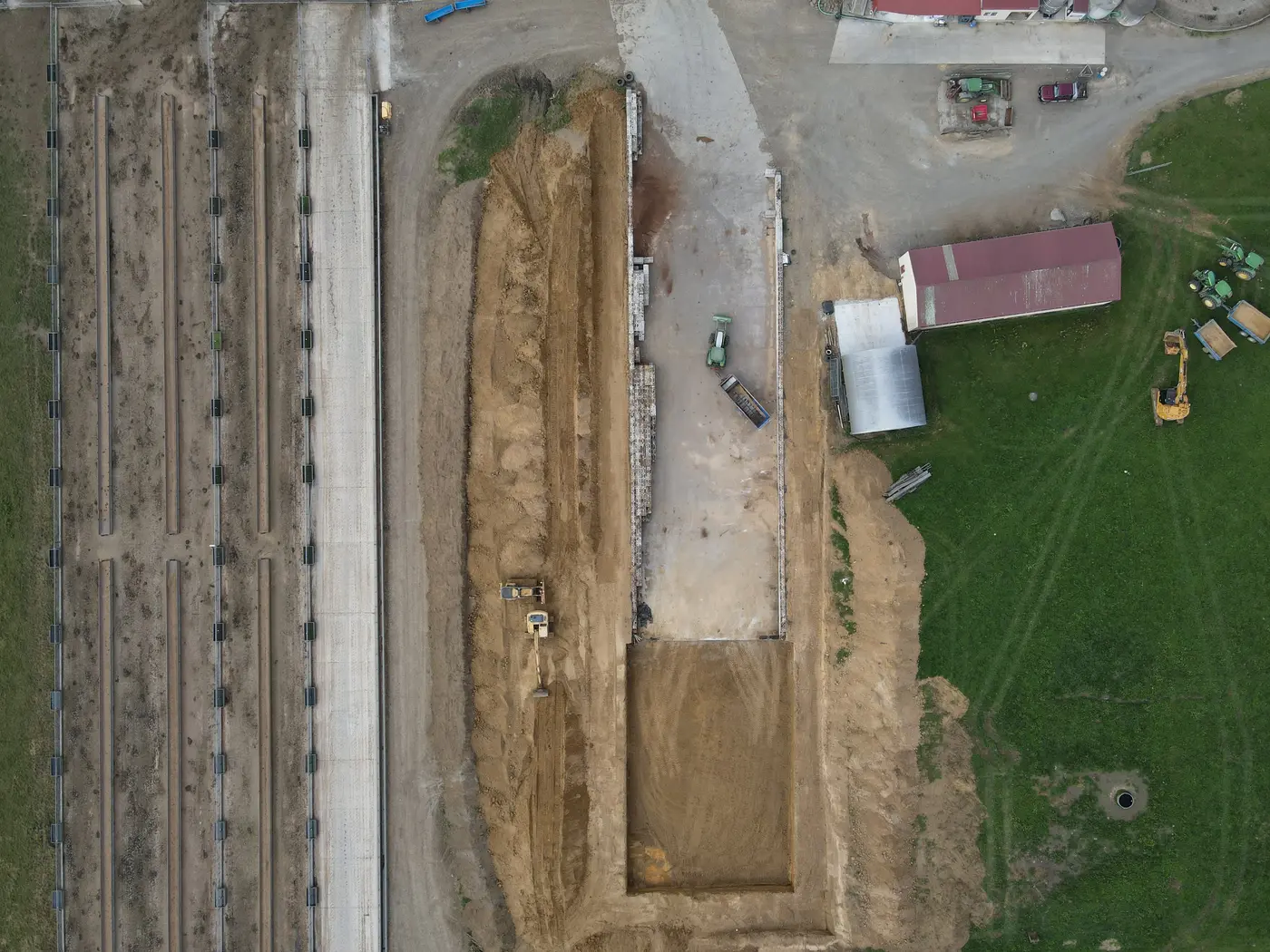
Farm drainage and culverts
Subsoil drainage, mole drainage, water tables, culverts and crossings. Wet paddocks are lost production, and most of the time the fix is a lot cheaper than the loss.
All rural earthworks
See the full range of rural earthworks we take on across the Waikato and King Country.
Across the Waikato & King Country
Owner-operated and local. If you’re on this list or nearby, give Lyndon a call — we cover the wider Waipā district and beyond.
- Te Awamutu
- Cambridge
- Hamilton
- Ōtorohanga
- Kihikihi
- Pirongia
- Waipā
- King Country
- & surrounds