Home / Residential / Driveways & access
Residential earthworksDriveways and rural access
Driveways, entranceways and long rural access formed, metalled and compacted, with the culvert and crossing at the road end done properly. From the gate to the front door, in all weather.
Formation first, metal second
A driveway that potholes and rutts every winter almost never has a metal problem. It has a formation problem. Topsoil left under the base, no crossfall, and no way for water to escape, so the base stays saturated and traffic breaks it up.
We strip the topsoil out of the formation, shape and compact the subgrade with a fall on it, then build the base up in compacted layers. On soft or peaty ground we lay geotextile so the base course does not simply disappear down into the subgrade over a few seasons.
The road end matters most
The entrance is the part that gets the heaviest use, the sharpest turning and all the water coming off the road. It is also the part your council has rules about.
Vehicle crossings, culvert size and sight lines are usually controlled by the local council, and on a new build the crossing often has to be in place before other work can proceed. We install the culvert at the right invert, build the crossing up so it takes the turning traffic, and form the ends so they do not scour out.
Long rural access
On a lifestyle block or a back section, the driveway is effectively a private road. It has to carry a concrete truck, a furniture lorry and eventually a fire appliance, not just the car.
That means thinking about width, passing places, turning space at the house end and grade on the steep bits. It also means drainage the whole way along rather than just near the house, because a long driveway collects a lot of water.
What we do
- Set out, clearing and topsoil strip
- Subgrade shaped, crowned or crossfalled, and compacted
- Geotextile over soft ground where required
- Base course placed in layers and compacted
- Running course placed and rolled, or prepared to seal or concrete
- Vehicle crossings and culvert installation at the road boundary
- Side drains, sumps and cut off drains
- Passing bays, turning areas and parking
- Preparation for chip seal, asphalt or concrete finish
Good to know
Why does my driveway keep potholing?
Usually the formation rather than the metal. If topsoil was left under the base, or there is no crossfall and nowhere for water to drain, the base stays wet and traffic breaks it up. Adding more metal on top of a wet base does not fix it.
Do I need council approval for a new entrance?
Usually yes. Vehicle crossings, culvert size and sight lines are generally controlled by the local council, and on a new build the crossing often needs to be in before other work proceeds. Check with your council early, and we will build to what they require.
Can you prepare a driveway for sealing or concrete?
Yes. We build and compact the base to the level and tolerance the sealing or concrete contractor needs, so they can come straight in behind us.
How wide should a rural driveway be?
Wide enough for the largest vehicle that will realistically use it, which on a build means a concrete truck and later a fire appliance. On long access we also look at passing places and turning space at the house end.
Often done at the same time
House site preparation and building platforms
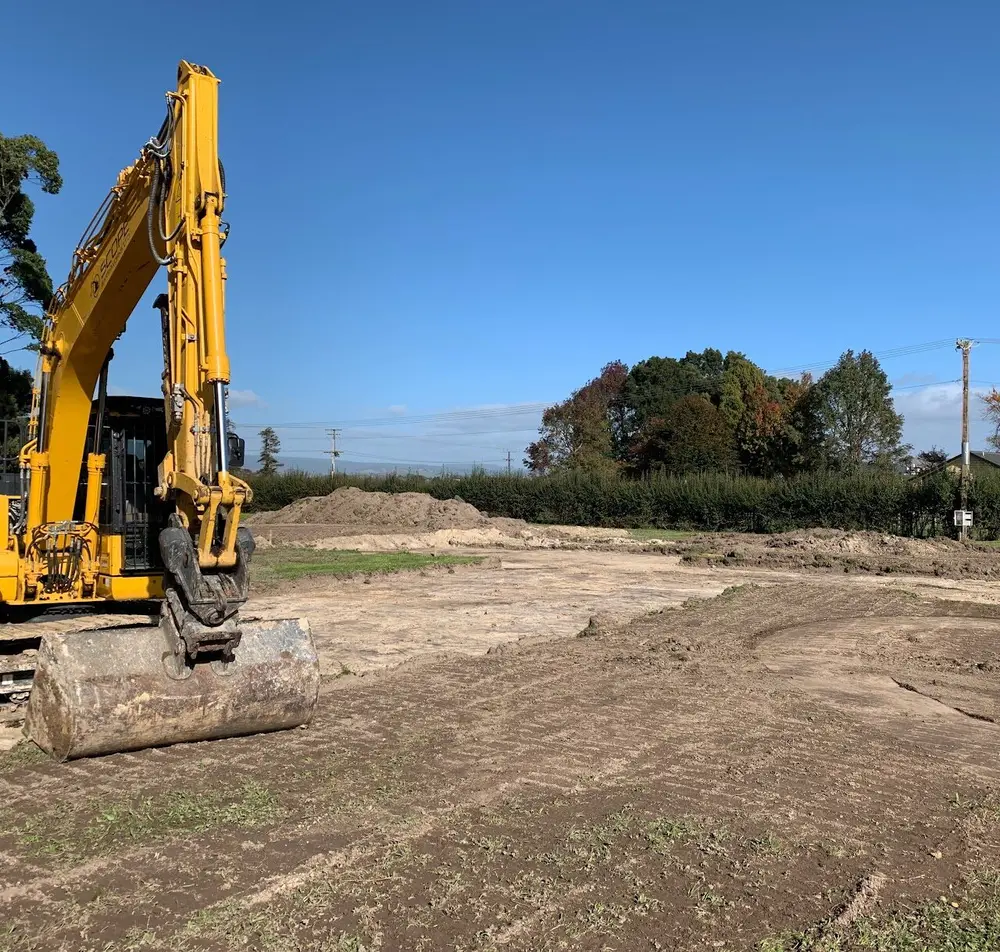
Building platforms cut, filled, benched and compacted to grade, ready for your foundation crew and your engineer. The first trade on site sets the tolerance for everything that follows.
Section drainage and stormwater
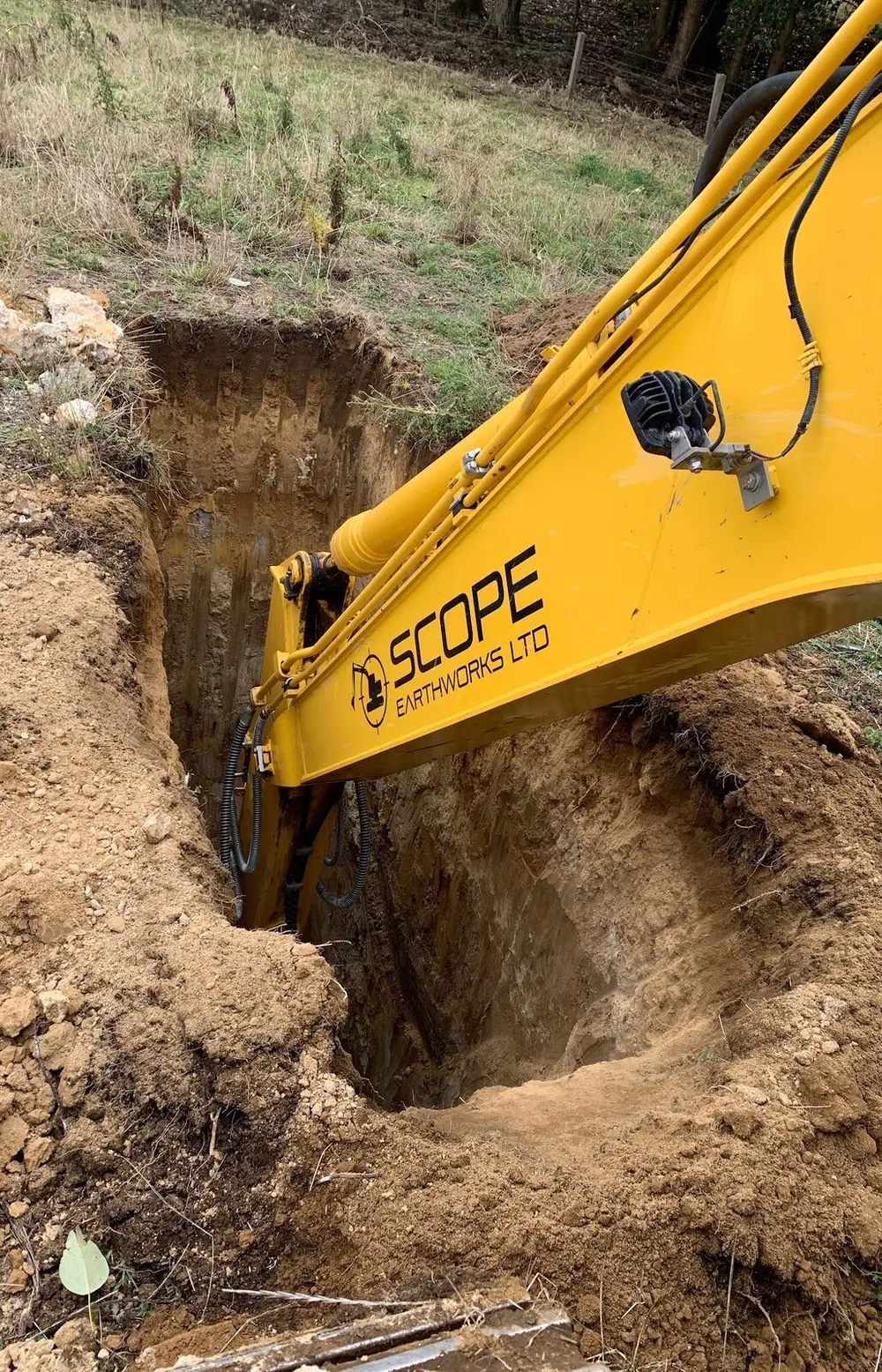
Stormwater lines, subsoil drainage, soak holes and downpipe connections. Water is what turns a good section into a problem section, and it is far cheaper to deal with before the lawn goes in.
All residential earthworks
See the full range of residential earthworks we take on across the Waikato and King Country.
Across the Waikato & King Country
Owner-operated and local. If you’re on this list or nearby, give Lyndon a call — we cover the wider Waipā district and beyond.
- Te Awamutu
- Cambridge
- Hamilton
- Ōtorohanga
- Kihikihi
- Pirongia
- Waipā
- King Country
- & surrounds